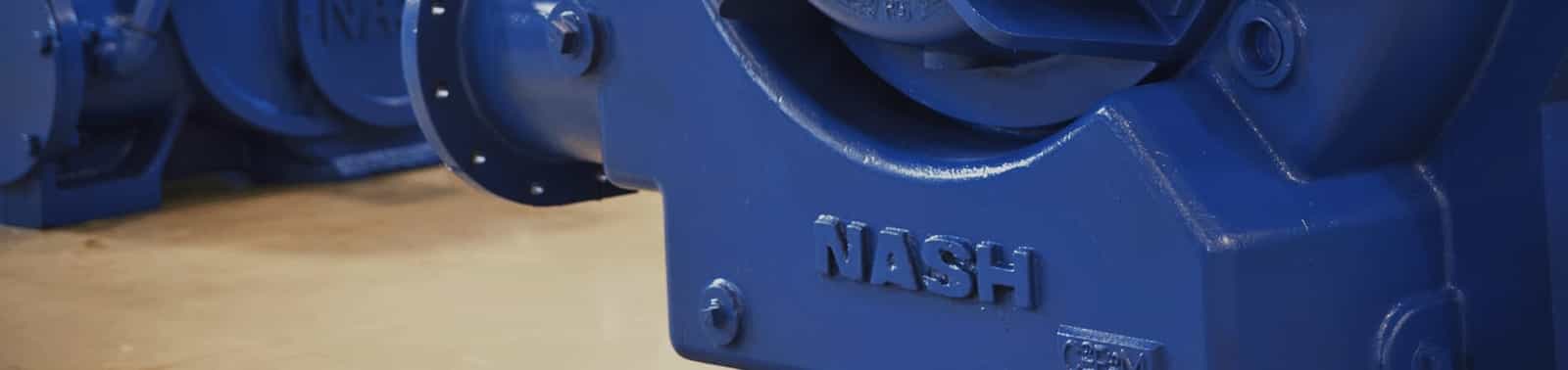
NASH equipment is engineered for long-term reliability in demanding industrial environments. With proper maintenance and routine inspections, NASH liquid ring vacuum pumps, compressors, and engineered systems can provide decades of dependable service.

Even the most reliable equipment can experience performance issues due to changes in operating conditions, process requirements, utilities, or system configuration. When challenges arise, effective troubleshooting starts by asking two critical questions:

What changed?
When did it change?

Identifying recent process, operating, or maintenance changes is often the fastest path to restoring optimal performance.

maintenance tips.png

Maintenance Tip: Preventing Bearing Failure

Prevent liquid ring pumps and compressor sbearing failure with NASH maintenance and troubleshooting.

Maintenance Tip: Bearing Lubrication

The most common reasons for bearing problems are a lack of lubrication or the use of contaminated lubrication.

Maintenance Tip: Monitoring Pump Operating Temp.

Monitoring the operating temperature of your pump can indicate maintenance issues and needs before they turn into larger problems.
maintenance tips.png

Maintenance Tip: Stuffing Box Maintenance

Did you know you should change your stuffing box packing annually? Download the case study to learn more.

Maintenance Tip: Measuring Condenser Air In-Leakage | NASH

If you are using a Nash condenser exhauster vacuum package, there is a simple method to measure air in-leakage on your condenser.

Maintenance Tip: Pipe Strain

One of the most significant issues that impacts shaft alignment and contributes to failures due to misalignment is pipe strain.
maintenance tips.png

Maintenance Tip: Never Mix Greases

The mixing of greases can reduce your machine's effectiveness and lead to problems like running hot to completely breaking down.
maintenance tips.png

Maintenance Tip: Dealing with Seized Pipe Plugs

Remove pipe plugs and studs with ease using THE BEAR SOLUTION - download our case study to learn more.
maintenance tips.png

Maintenance Tip: Packing Tips Part 1

Prevent pump packing problems or failure through regular inspection and maintenance download this mainenance tip to learn more.
maintenance tips.png

Maintenance Tip: Cavitation Failure Analysis

Cavitation is caused by the presence of gas bubbles under high pressure being suddenly subjected to a low pressure.

Maintenance Tip: Troubleshooting High Horsepower

Determine horsepower requirements by the operating conditions such as vacuum levels and pump speed like rpm.
maintenance tips.png

Maintenance Tip: Hot Pump Operation

High vacuum pump temperature is an indication of low seal water flow - download the case study to learn more.

Maintenance Tip: Troubleshooting High Horsepower

Determine horsepower requirements by the operating conditions such as vacuum levels and pump speed like rpm.

Maintenance Tip: Preventing Failure Due to Calcium Build-Up

Calcium build up can cause higher horsepower consumption, reduction in pump capacity, lost production and pump damage.

Maintenance Tip: Pump Restart Procedure

Liquid ring vacuum pumps and compressors that may have been exposed to flood waters should be inspected for damage.

Common Issues We Help Customers Resolve

Our maintenance and troubleshooting resources are designed to help operators, maintenance teams, and reliability professionals address common equipment concerns, including:

  • Reduced vacuum or compression performance
  • Excessive operating temperatures
  • Increased power consumption
  • Unusual vibration or noise
  • Seal liquid flow issues
  • Cavitation concerns
  • Pressure fluctuations
  • Startup and shutdown problems
  • Process upsets affecting equipment operation
  • Unexpected downtime and reliability issues

Preventive Maintenance Best Practices

Routine maintenance is one of the most effective ways to maximize equipment reliability and reduce unplanned downtime.

Key recommendations include:

  • Monitor operating pressures and temperatures
  • Verify seal liquid quality and flow rates
  • Inspect piping, valves, and instrumentation
  • Check bearings and lubrication systems where applicable
  • Monitor vibration levels and operating sounds
  • Review process changes that may impact equipment performance
  • Use genuine OEM parts during maintenance activities
  • Follow recommended inspection intervals

Proactive maintenance can help extend equipment life, improve efficiency, and reduce total operating costs.

Expert Guidance for Faster Problem Resolution

NASH service experts have helped customers across North America diagnose and resolve performance issues in applications ranging from chemical processing and oil & gas to power generation, pulp & paper, wastewater treatment, and general manufacturing. Our technical resources provide practical guidance for identifying root causes, understanding common operating problems, and implementing corrective actions that restore equipment performance.

North American Service & Support

When troubleshooting resources are not enough, Nash offers expert technical support, field service, OEM replacement parts, and maintenance assistance throughout North America.

Our service teams can help with:

  • Equipment inspections
  • Performance evaluations
  • Troubleshooting support
  • Repair recommendations
  • OEM parts identification
  • System optimization
  • Equipment upgrades
  • Lifecycle maintenance planning

Explore Maintenance Resources

Browse the maintenance tips, troubleshooting guides, and technical articles below to learn how to improve reliability, optimize performance, and keep your NASH equipment operating efficiently.