

NASH 2BE Series of Liquid Ring Vacuum Pumps - How It Works Nash 3.34K subscribers Subscribe 68

To load this content, approve your cookie preferences and allow the required cookies.

Characteristics of Liquid Ring Compressors

Durability: LRCs have only one moving part and no metal-to-metal contact, which reduces wear and tear and extends their lifespan1. 

Isothermal Compression: The liquid absorbs the heat generated during compression, maintaining a nearly constant temperature, which is beneficial for handling flammable or explosive gases. 

Versatility: They can handle gas mixtures containing liquids or vapors without significant loss in capacity. 

Low Maintenance: With fewer moving parts, LRCs require less maintenance compared to other types of compressors. 

Why Use a Liquid Ring Compressor?

Handling Wet Gases: LRCs can efficiently compress gases that contain liquids or vapors without performance degradation. 

Durability and Longevity: They are robust and can operate in harsh conditions, providing long service life with minimal maintenance. 

Safety: The isothermal compression process reduces the risk of overheating and ignition, making LRCs ideal for flammable gases.
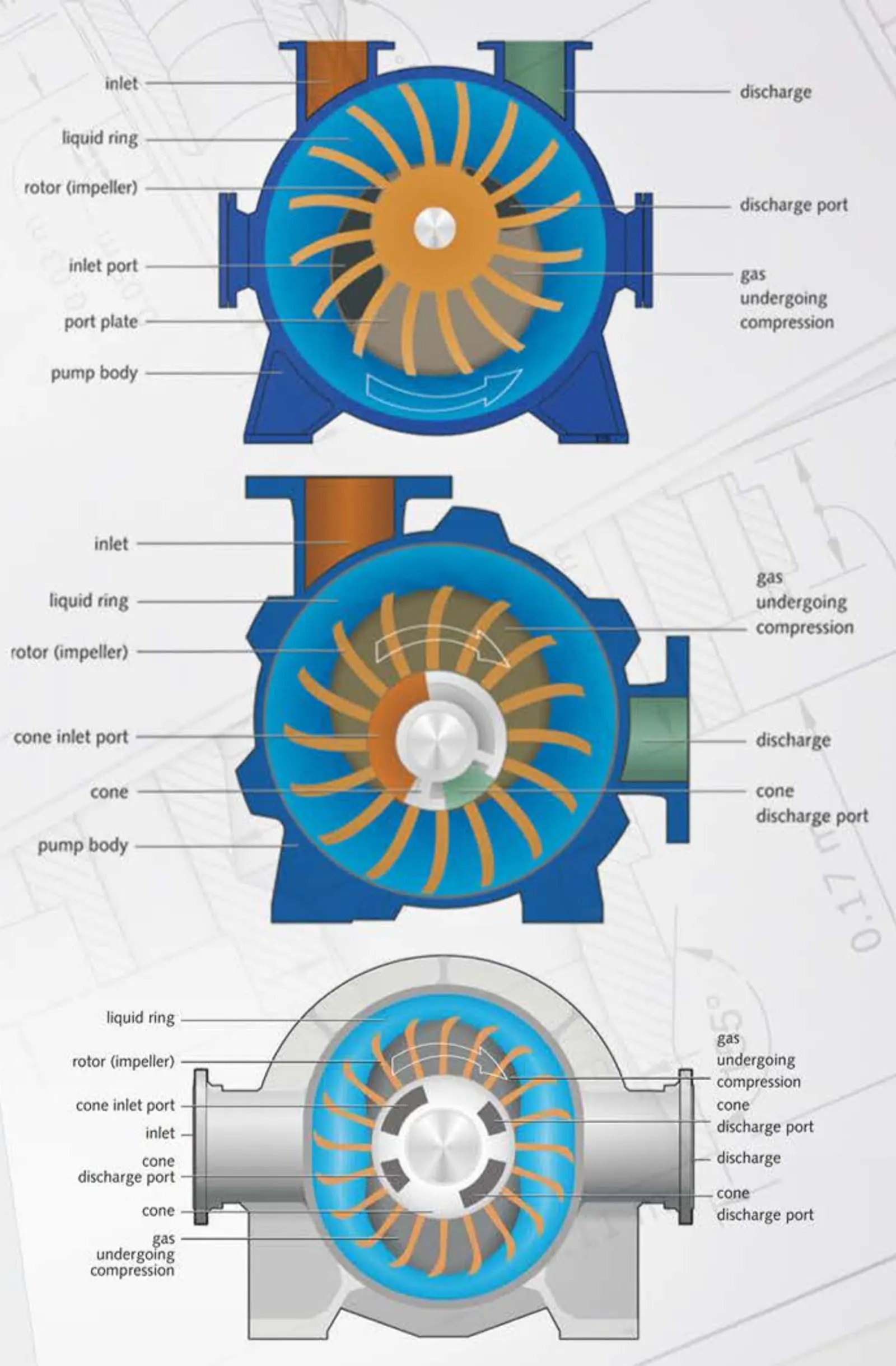
Liquid Ring Compressor Operating Drawing NASH

Liquid Ring Compressor vs. Screw Compressor

Design: LRCs use a liquid ring to compress gas, while screw compressors use two interlocking helical screws. 

Efficiency: Screw compressors are generally more energy-efficient than LRCs, which can have efficiency limitations. 

Application: LRCs are better suited for applications involving wet gases or gas mixtures with liquids, whereas screw compressors are preferred for dry gas applications 

Liquid Ring Compressor for Hydrogen 

LRCs are used in hydrogen applications due to their ability to handle gas mixtures and maintain isothermal conditions, which are essential for safely compressing hydrogen. Their design minimizes the risk of ignition, making them suitable for hydrogen processing and storage2. 

Industries Using Liquid Ring Compressors

Chemical Processing: For handling corrosive gases and gas mixtures. 

Oil and Gas: In flare gas recovery systems and other applications involving wet gases. 

Food and Beverage: For vacuum packaging processes where maintaining low temperatures is crucial. 

Pharmaceutical: In applications requiring oil-free compression and handling of vapors. 

Benefits of Liquid Ring Compressors

Versatility: Suitable for a wide range of gases, including those with liquids and vapors. 

Reliability: Robust design ensures long-term operation with minimal downtime. 

Safety: Isothermal compression reduces the risk of overheating and ignition. 

Low Maintenance: Fewer moving parts result in lower maintenance requirements. 

Liquid Ring Compressors are a reliable and versatile solution for various industrial applications, offering durability, safety, and the ability to handle complex gas mixtures efficiently

Contact Our Experts

Have questions or need more information? Choose one of the options below to contact us, request a service, or request a quote