
Never Mix Greases
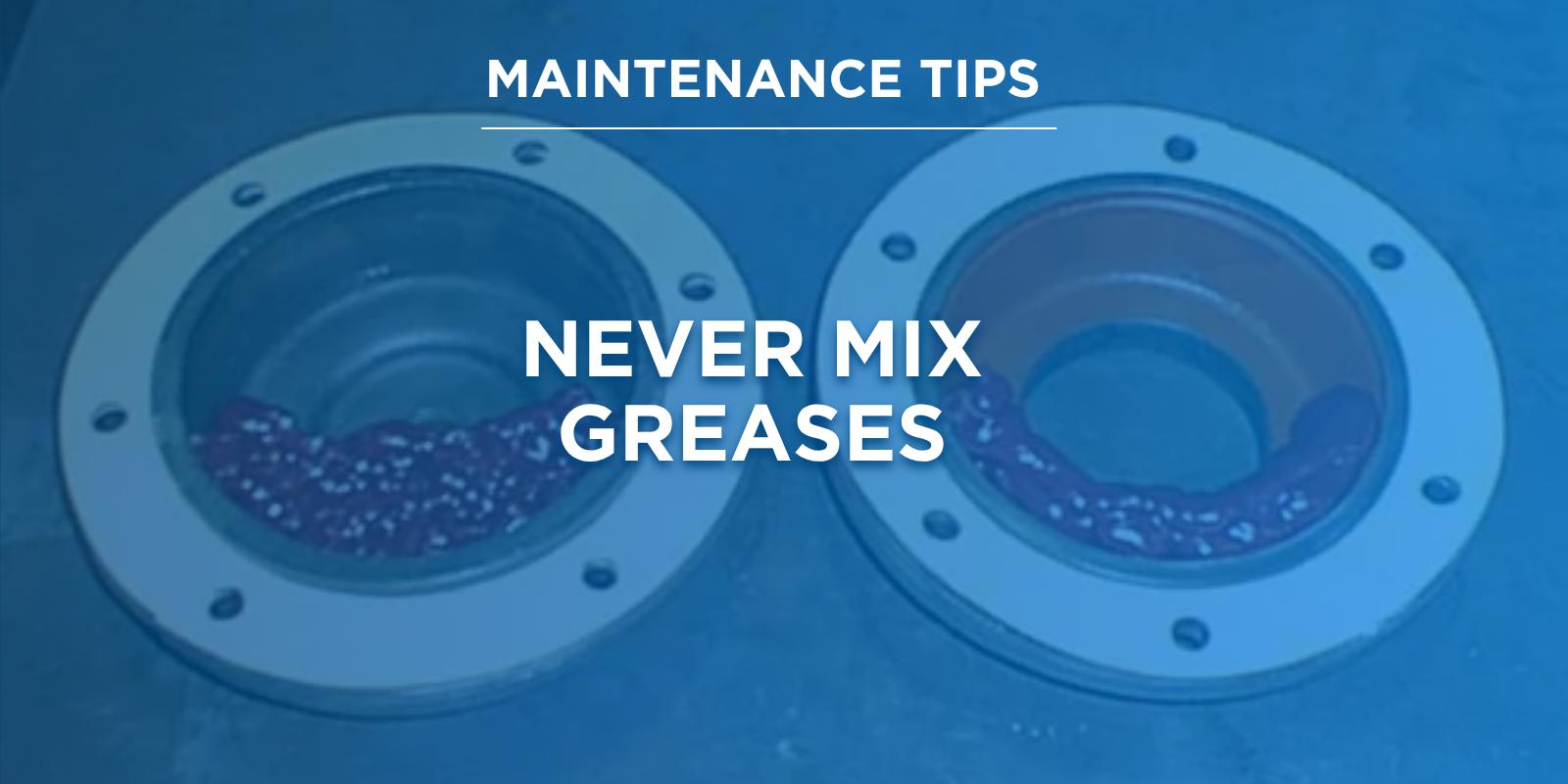
Avoid Mixing Greases: Why It Matters
Many lubrication guides say that grease mixing should be kept to a minimum. In reality, grease manufacturers generally recommend not mixing greases at all unless compatibility has been confirmed.
Grease is made from three main components:
- Base oil
- Thickener
- Additives
Even when two greases share a similar name or the same NLGI grade, they can still be incompatible. Different grease types may use different thickener systems (thickener families), base oil formulations, and additive packages. Because these components interact in the mixture, the result can be unpredictable — especially under heat, load, and vibration.
In practice, you should treat any two greases as “incompatible” unless grease compatibility has been confirmed by the grease supplier or the equipment manufacturer. If compatibility isn’t verified, mixing can lead to poor performance, oil separation, or loss of lubrication where it matters most.
What Happens When Incompatible Greases Are Mixed?
Incompatible grease mixtures typically fail in one of two ways:
- They harden
- They soften
Both situations can lead to:
- Increased operating temperatures
- Excessive noise
- Accelerated wear
- Bearing or equipment failure
Before Switching Greases
Before you change lubricants or mix any grease, confirm Grease Compatibility with the grease supplier or the equipment manufacturer. Compare the two products using the supplier’s compatibility guidance and the technical details — thickener family, base oil, and additive package — along with your intended applications and operating conditions. If the information is incomplete or unclear, request written confirmation rather than relying only on the grease name or NLGI grade.
If you must switch greases:
- Verify compatibility.
- Stop adding the old grease.
- Purge the system until fresh grease appears.
- Monitor temperature, noise, vibration, and leakage after startup.
Can You Mix Grease and Oil?
Generally, no. Adding oil to grease changes its consistency and can weaken its ability to stay in place and protect components. This may result in:
- Oil separation
- Leakage
- Reduced lubrication performance
- Increased wear and heat
Grease Maintenance Best Practices
- Use the specified grease.
- Clean fittings before greasing.
- Apply the correct amount.
- Inspect bearings and seals regularly.
- Monitor temperature and vibration.
- Check for leaks and oil separation.
- Keep maintenance records.
Setting the Right Regreasing Interval
There is no single regreasing schedule for every Nash pump. Follow the equipment manual and consider:
- Operating speed and load
- Temperature
- Environmental conditions
- Duty cycle
- Grease type
- Service history
Avoid overgreasing, as excess grease can increase leakage and reduce lubrication effectiveness.
The safest approach is simple: use the recommended lubricant, avoid mixing products, and monitor equipment performance closely after any lubrication change.

Frequently Asked Questions (FAQs)
Using incompatible lubricants can shorten bearing life, increase maintenance costs, and lead to unplanned downtime. Verifying compatibility helps ensure consistent lubrication and reliable equipment operation.
Reach Out to Our Experts